
Final analysis Midterms 2022
As the United States faces one of the most important midterms in its history, its worth considering the profound moment of political disunity the United States is currently experiencing.
Not since the Civil War have we seen this level of polarization, with large swaths of voters seeing their political opponents as a threat to society.
It is imperative to underline the moment of truly existential danger the United States is in right now.
The political violence seen in the January 6th Storming of the US Capitol has accelerated, with 80% of Americans being worried about political violence.
The coming elections have all the normal policy implications, but also determine the very health of the US democratic system, and the viability of election denialism as an electoral strategy going forward.
You can read my previous analysis from September here.
How unusual are these midterms?
For the opposition party midterms should be an absolute cakewalk. Only two times in modern US history has the President’s party expanded its majority during the midterms. For this to happen, era defining political shocks to the system must occur; As you may have noticed, we live in era defining times.
Under FDR in 1934, the Great Depression being in full swing, Democrats managed to expand their majorities in congress. More recently, the rally around the flag and global fallout from 9/11 allowed George W. Bush to expand the Republican majority in the 2002 midterms.
These are the types of events that need to happen for a US midterm election to even be close. And this year, it is very close. History says that the Democrats will be crushed on Election Day 2022. The prevailing political winds always favor the opposition party, as sitting presidents fail to keep up their campaign promises and general fatigue sets in. To illustrate the size of this effect, look no further than Virginia’s gubernatorial race in 2021. A state that went for Biden by 10 points in 2020 went for a Republican by 2 points only a year later. Under normal circumstances a swing towards the opposition party of 10-15 percentage points is expected. The race for the 2022 midterms should not, by any conventional wisdom, be close at all. So, lets understand why this year it is.

Why are Republicans so weak this year?
There are two main factors that contribute towards Republican weakness these midterms.
1. The influence of Trump
2. The downfall of Roe v. Wade
The Trump Factor
Let’s start with the Trump factor. While Trump himself is not on the ballot, these elections are all about him. Whereas normally the midterms are a referendum on the sitting president, this year looks more like a referendum on Trump, and especially on his rhetoric around the Big Lie that the 2020 elections were stolen. Trump has very actively intervened in the primary process on the Republican side, which has resulted in many of the Trump-iest candidates being the Republican nominee. This has, by the admission of Senate Minority Leader Mitch McConnel, resulted in some very low-quality candidates. Characters like Dr Oz in Pennsylvania and Herschel Walker in Georgia are the most obvious examples.
But Trump’s influence goes quite a bit further than that. There are 291 Republican election deniers on the ballot this year, running in 48 out of 50 States. These elections do not only practically determine whether election deniers will obtain public office, but also whether election denialism itself is a viable political strategy. As said, under normal circumstances Republicans should sweep into power up and down the country, but in many cases the races are much closer than expected. Part of the explanation for this is that election denialism could be a very bad campaign strategy.
A clear example of this was 2020, where after losing Georgia in de Presidential Election, Trump called on his supporters to boycot the Georgia runoff elections. This promptly led to both Senate seats being won by the Democrats and them taking control of the Senate. There are also open questions about the strategic impact of election denialism. Some percentage of the believers of the Big Lie are true zealots that believe elections are all fake. But for those people why would you show up and vote in the first place? The issue of election denialism might be very animating but only to a very small group of supporters. At the same time it arguably distracts from issues that independents care about most like inflation and other pocketbook issues. There has yet to be clear evidence that election denialism has any viability beyond a base maximizing primary.
Finally there is Trump’s inability to not draw attention. While stumping for Marco Rubio in Florida he could not help but attack one of his main rivals for 2024, Florida Governor Ron deSantis who he referred to as Ron descantimonious. He also has been signaling very heavily that he will announce his 2024 presidential campaign by the end of November. While the relevance of Mar-A-Lago has waned, privately many Republicans are concerned about Trump’s broader viability, but are afraid of stating so publicly. Republicans who have publicly said that the election in 2020 was not stolen have also been subject to harassment and death threats.
Roe v Wade and abortion rights
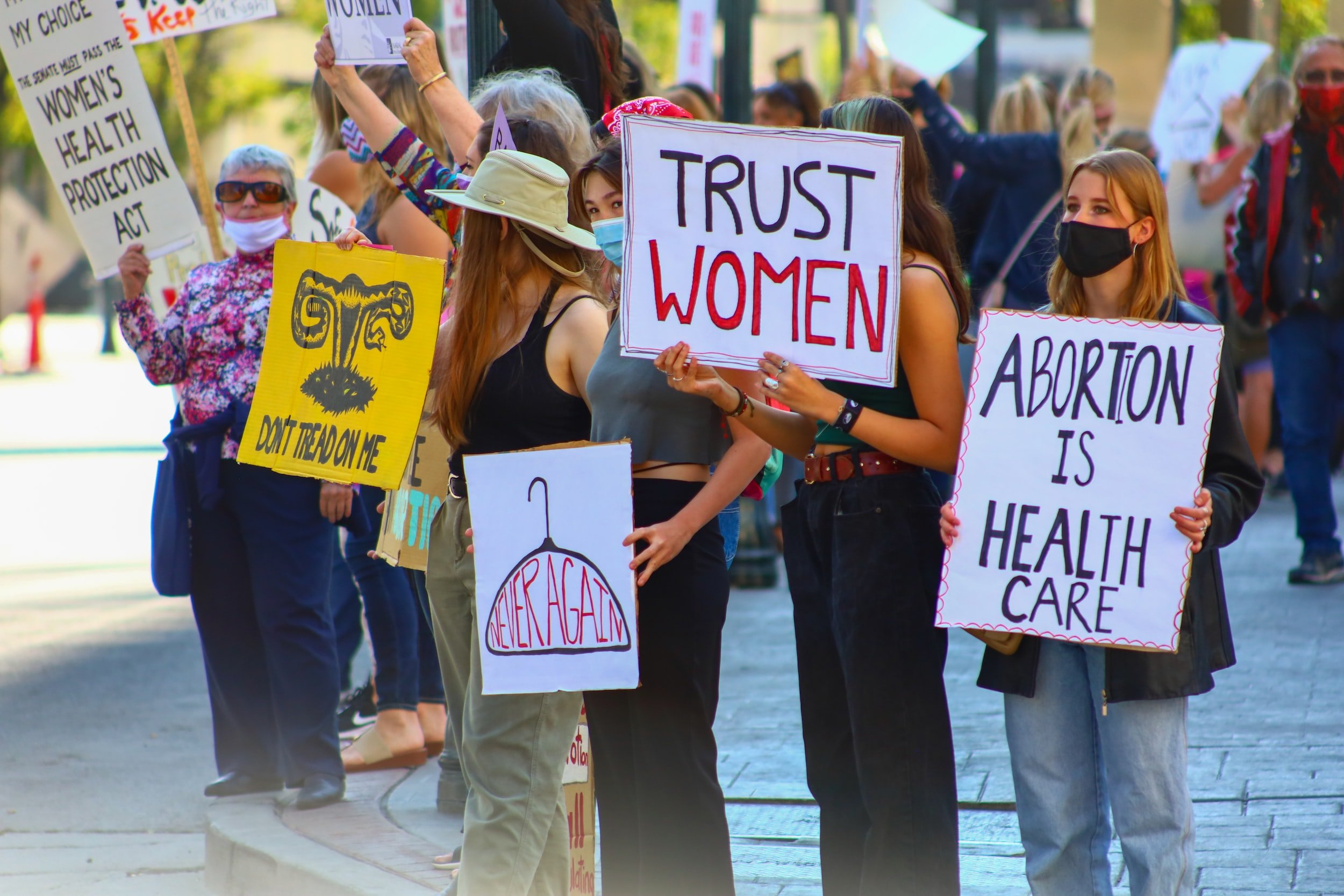
The second reason is the downfall of Roe v Wade. Strategically this has meant that the Republicans are not truly an opposition party. Instead, through their control of the courts, they have managed to implement conservative policy despite holding neither the legislative nor executive branch. It has not helped that the Republican playbook maximizes the culture war rhetoric which only draws further attention to the unpopularity of striking down Roe v Wade, with well over 60% of American supporting abortion rights. A couple of states also added ballot measures on abortion to add the right to the state’s constitution directly. These measures could have a large impact on turnout, with Michigan’s abortion measure being particularly significant.
The Dobbs decision repealing the right to abortion has been a profound shock to US politics. In addition to being the first time in US history that an acquired civil right is rolled back, it has also brough about a wholesale shift in the political calculus. Unfortunately for the Republicans their party has been strongly identified with repealing abortion, and it has proven to be incredibly unpopular.
We have seen the first indications of this already in the Kansas abortion referendum and the New York 19th special election, where the issues of abortion right was salient enough to let Democrats exceed expectations. We have also seen an uptick in female voter registration, as especially women and young voters have been energized by the issue.
There is a certain amount of historic irony about this all. For decades the GOP has had issue ownership on abortion, using it as a reliable way to turn out evangelical voters. The GOP is uniform in its opposition to abortion, just as the Democrats are near uniform in their defense. Now that the Republicans have achieved their long term goal they find themselves in a severely weakened position.
Not only have they lost one of their most salient energizing issue, they have also boosted pro-abortion voters. In an effort to keep the evangelical base the GOP has been forced to raise new culture war issues such as transgender rights, gay marriage, and even interracial marriage. These issues are much less animating than abortion and instead have given Democrats an opportunity to unexpectedly codify the right to gay/interracial marriage into law, handing Democrats a legislative win. Even more worrying for the GOP, several Republicans voted in favor, sensing the profound unpopularity of opposing gay marriage.

So if Republicans are so weak they will lose right?
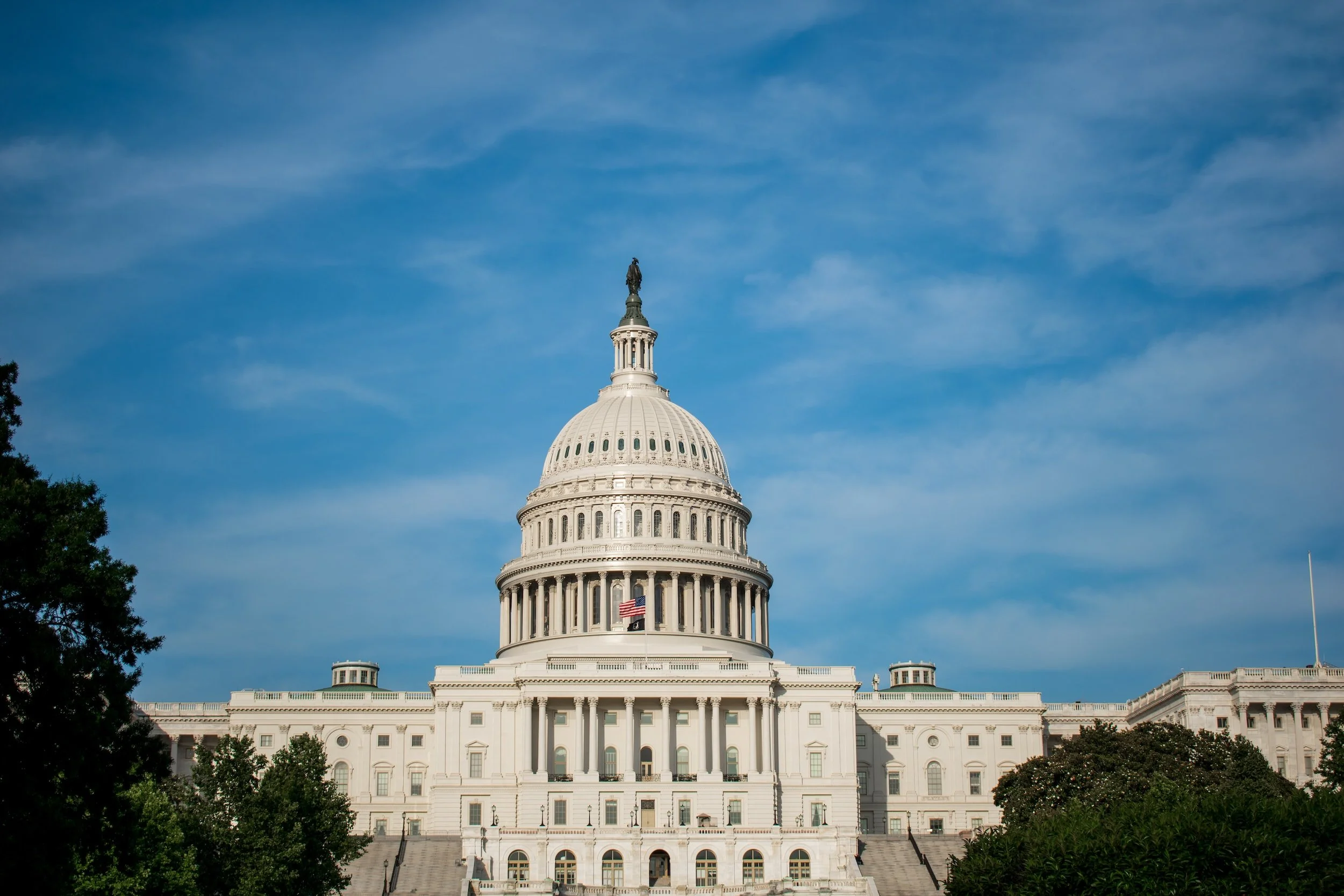
No. Even though Republicans are much weaker than you would expect, they are very likely to take the House, and possibly the Senate as well. The House is likely safe for the GOP because of very aggressive gerrymandering in red states. Democrats have in some cases also tried to gerrymander structural advantages in blue states but have seen their maps struck down by the courts, or in some other states have non-partisan commissions to draw districts. While this might be the normatively correct thing to do, strategically the Democrats have tied one arm behind their back and will likely lose the House because of it. In the Senate things are a bit more complicated. Firstly, not every state has Senate elections. Secondly, Senate races are statewide, meaning you can’t fudge your way to a victory by gerrymandering. Thirdly, some of the worst Republican candidates are running for Senate, and they get the most attention. Fourth is the favorable map for Democrats, out of 35 seats up 21 are held by Republicans and only 14 by Democrats, putting Republicans on the defensive. The combination of all four of these factors appears be similar in size to the 10–15-point advantage that we extrapolated from Virginia but in favor of Democrats.
What are races to watch?
On the House level it is difficult to pick districts to watch because redistricting has redrawn almost all of them. Generally, the battle is raging in the suburbs with Virigina-7 being an emblematic example. Incumbent Abigail Spanberger was part of a wave of moderate Democratic women who gained their seats in 2018. She is challenged by Yesli Vega, a former law enforcement official and local conservative firebrand. Women are generally seen as less radical than men, a strategy that has commonly been used to sand off the rough edges for moderate voters. Vega was also endorsed by Trump but has since distanced herself from him, as tacking close to Trump is a poor strategy in a blue-ish suburb.
For the Senate it is much clearer, the most important states are (in order) Pennsylvania, Georgia, Nevada, Arizona, North Carolina, New Hampshire, and Ohio. With the Senate being closely split 50-50, every state is crucial to determine the balance of power. Pennsylvania has Lieutenant-Governor John Fetterman (D) running against Dr. Mehmet Oz (R) and has drawn national attention. Mr. Fetterman has suffered a stroke in May which has become weaponized in the campaign. On the other side Dr. Oz has been accused of being a carpetbagger (political candidate with no local connections) and has been widely mocked for being out of touch with everyday voter concerns. Should Republicans lose Pennsylvania the pathways to a GOP Senate majority become increasingly slim.
Another state to keep an eye on is Georgia which has Senator Rafael Warnock (D) running against former football star Herschel Walker (R). Georgia is a southern state with a long history of voter suppression and a legacy of slavery, and with both candidates being black men race looms large. Senator Warnock is the first black Democrat elected in the former Confederacy and the first African American to represent Georgia in the Senate. While Mr. Walker has been widely panned as being a low-quality candidate (he called himself “just a country boy” and “not that smart”), the race is a broader strategic battle of black voters who are reliable Democratic. Republicans have made some gains in peeling off black men in particular, a trend that has worried Democratic strategists.
A comparable dynamic is occurring in Nevada, where Senator Catherine Cortez Masto (D) is challenged by Adam Laxalt, former co-chair of Trump’s 2020 campaign in Nevada. Senator Cortez Masto has shown surprisingly weak results in the polls and has seen her support among Latino voters slide despite being the first Latina Senator. Meanwhile Laxalt has been running an aggressive Big Lie campaign, making repeated unsubstantiated claims about voter fraud in Nevada and trying to overturn the 2020 election results. Nevada is a fast-growing state with a large Latino population. Republicans have long claimed that Latino’s are natural conservatives and the 2012 assessment of their election loss specifically highlighted Latino’s as a crucial demographic to remain viable in future elections.
Finally, there are several other Senate races that could swing the balance, but these three are the most likely tipping points. Keep in mind that there is a huge amount of uncertainty and that if there is a sufficiently large Red Wave states like Arizona and New Hampshire might also be picked up by the GOP. Conversely, if Democrats have a better-than-expected night its feasibly to pick up North Carolina and even Ohio.
When can we expect results?
Do not expect results on election night itself. Several of the key races are in notoriously slow counting states, especially Georgia, Pennsylvania, Nevada, and Arizona. In 2020 it took several days for Pennsylvania to be called as it has laws on the books that prevent mailed ballots from being counted before election day. Its possible that the House is called on election night but if its close it could also drag out for days if not weeks. Several states out West like California allow mail in ballots to come in later if they are postmarked on election day. Most likely Georgia will go into a runoff election if neither candidate manages to get 50%+1 vote, meaning that its likely control of the Senate won’t be determined until December 6th. Of course, given the political climate and rampant election denialism any delay in the results is likely to fan the flames of conspiracy theories and the possibility of political violence looms ever larger.

Conclusion
These races shouldn’t be close. The pervailing economic headwinds and the structural advantages should favor a Republican sweep to power. Historical events have to occur to break that trend. Yet we live in historical times and have seen some of the most sweeping changes in American life since the Civil Rights Era. Democrats might be poised to have a historically good midterm, yet ironically that does not mean they will keep majorities in Congress.