From Taiwan to Tik Tok, a Sillicon Curtain has fallen across the world
Just as during the Cold War, ideological boundaries are being drawn. With Great Power competition heating up, actors across the globe are raising barriers in anticipation of a protracted struggle. Yet where during the Cold War the Curtain was made of blood and iron, the one that is falling now is made of bits and sillicon.
First coined by Winston Churchill in 1946, the Iron Curtain refers to the boundary separating spheres of influence of the Soviet Union and the West. While initially a purely political barrier, it did not take long for the boundary to be physically reinforced, most notably in the form of the Berlin Wall. The Iron Curtain represented the sharpest and deepest boundary in human history, with entirely separate economic and political realities evolving on both sides. Lasting from 1945 until the end of the Cold War in 1991, even after its collapse we can still see its remnant by its ecological, political, and social footprint.
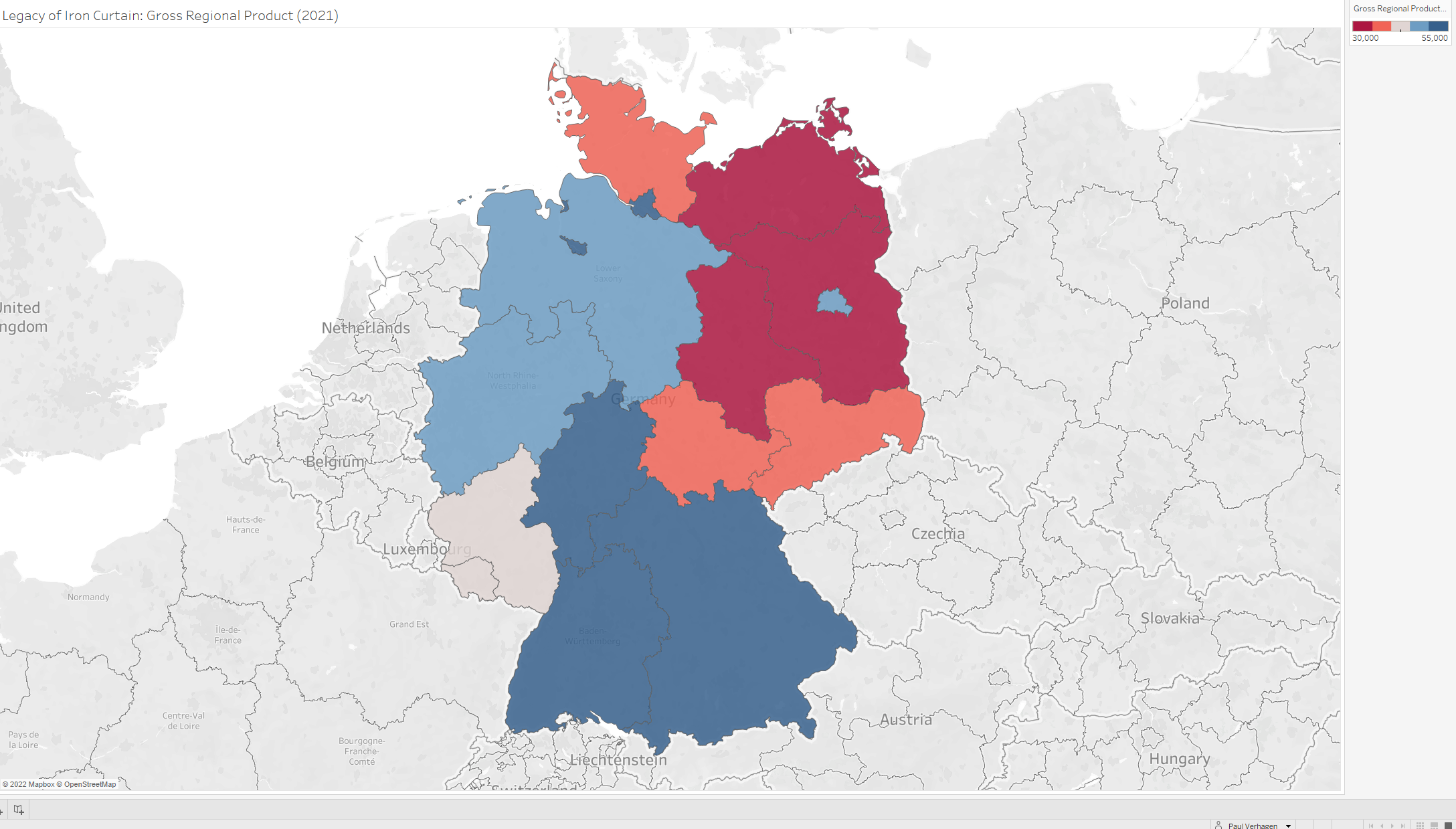
While history does not repeat, we find that it often rhymes. With the return of geopolitics, old instruments like block formation and strategic trade embargoes have obtained new relevance, and are being updated for use in the 21st century. The notable difference is that where the Iron Curtain was geared towards preventing the flow of people and physical goods, the modern version is aimed at stopping the flow of data and algorithms.